Rediscovering Agrimony: The Medieval Wound Herb That Modern Herbalism Forgot
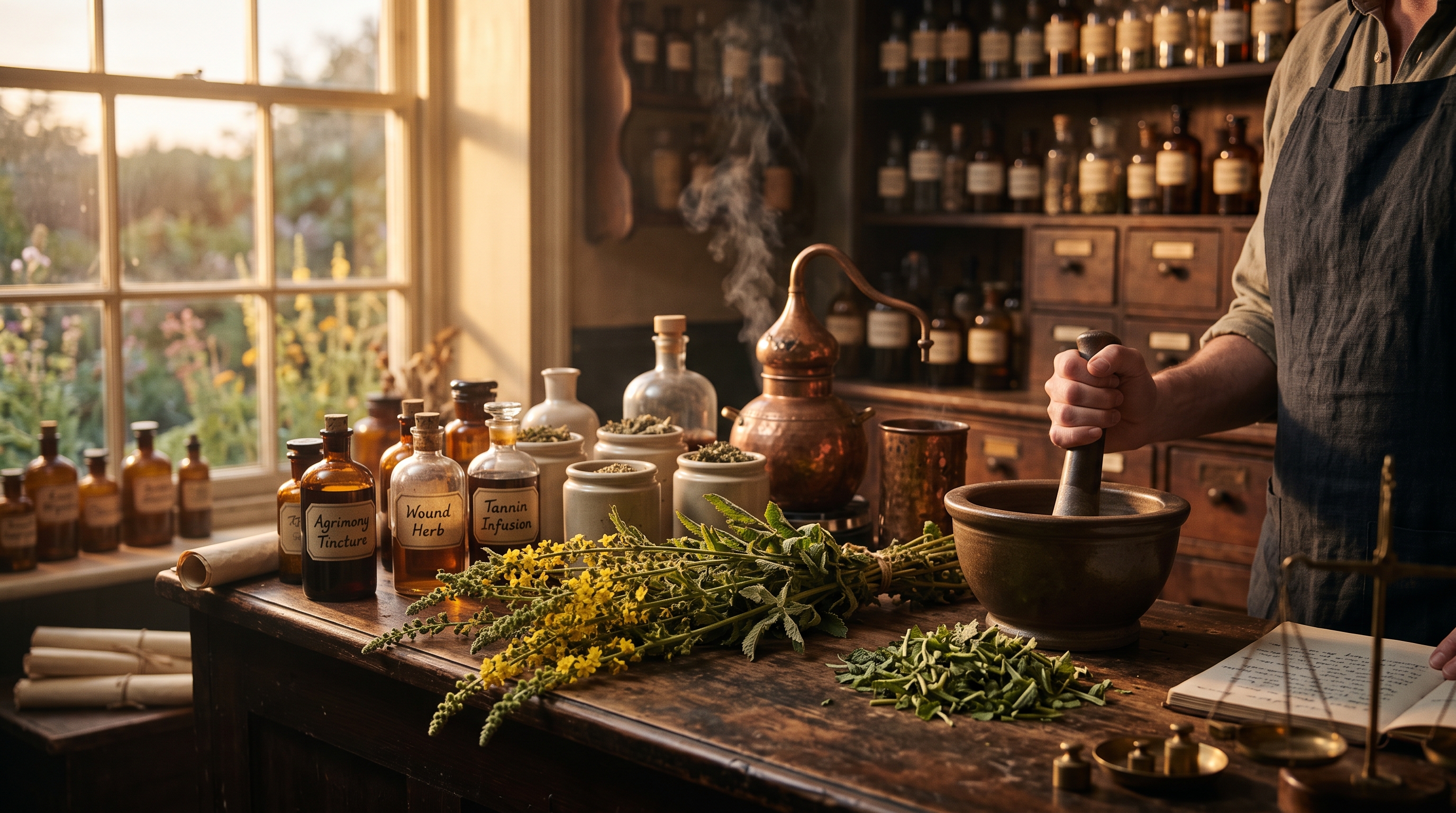
In a wellness landscape dominated by trendy adaptogens and tropical superfoods, some of history’s most reliable botanicals have quietly slipped into obscurity. Chief among them is Agrimony (Agrimonia eupatoria), a slender wild perennial with golden flower spikes that once commanded a central place in European apothecary traditions. Celebrated for centuries as a premier healing ally, this unassuming herb bridges traditional folklore with a remarkable profile of astringent tannins and soothing polyphenols that still offer profound value today.
Key Takeaways
- Astringent powerhouse rich in therapeutic tannins
- Digestive support for easing acute gut irritation
- Respiratory relief through soothing gargles and teas
- Topical heritage as an ancient wound wash
- Monastic staple with deep roots in European medicine
An Apothecary Staple: From Anglo-Saxon Charms to Battlefield Medicine
Agrimony’s medicinal lineage is as distinguished as it is ancient. Known to Anglo-Saxon healers as garclive, the herb was considered indispensable for treating everything from venomous stings to persistent fevers. By the Middle Ages, agrimony had earned a reputation as a front-line trauma remedy; battlefield surgeons frequently mixed it with vinegar and lard to dress open lance wounds and stop bleeding.
Beyond simple battlefield surgery, the plant occupied an esteemed position in English herbal lore. Traditional herbalists observed that agrimony possessed a calming influence on the body's internal linings, prescribing it to quiet stubborn coughs and steady an upset digestion. It became a garden essential for monastic infirmaries, cultivated intentionally alongside comfrey and sage as a reliable, multi-purpose remedy.
The Phytochemical Engine: Why Tannins Make Agrimony Work
What medieval herbalists identified by empirical practice, modern botany understands through phytochemistry. Agrimony is exceptionally rich in condensed and hydrolysable tannins, compounds that confer a distinct astringency. When introduced to mucous membranes or damaged tissue, these tannins cross-link proteins, creating a protective superficial barrier that tones swollen tissues and curtails localized bleeding.
Accompanying these tannins are significant concentrations of flavonoids, such as luteolin and quercetin, alongside phenolic acids and triterpenes. This combination imbues the aerial parts of the plant with pronounced anti-inflammatory and mild antimicrobial properties. Far from being merely a folk curiosity, agrimony provides a functional biochemical shield that tempers localized irritation.
Digestive and Throat Relief: Practical Applications for the Home Herbalist
In practical herbalism, agrimony remains one of the finest gentle tonics for the mucous membranes of the upper respiratory and lower digestive tracts. When prepared as a warm tea or oral rinse, its astringency makes it a classic throat gargle for professional speakers, singers, and anyone combating an acute, irritated sore throat.
Internally, agrimony tea functions as a carminative and gut-toning infusion. It helps dry excess secretions, mitigate loose stools, and soothe functional cramping without causing harsh digestive rebound. Because its action is mild rather than aggressively purgative, it serves as a gentle daily infusion to restore tone and comfort to sluggish digestion.
Conclusion: Reclaiming a Forgotten Wild Ally
Agrimony reminds us that the most effective botanical answers need not come from distant rainforests or sophisticated laboratories. Embedded in the old hedgerows and meadow edges of Europe and North America, this quiet plant holds a centuries-tested pedigree for restoring balance and protecting sensitive tissues.
As we look to build practical, resilient self-care routines, rediscovering herbs like Agrimonia eupatoria grounds us in a lineage of proven herbal wisdom. Whether brewed into a simple soothing tea or incorporated into an artisanal tincture, agrimony deserves its rightful return to the modern apothecary shelf.
Leave a Comment
Comments
No comments yet. Be the first to share your thoughts!